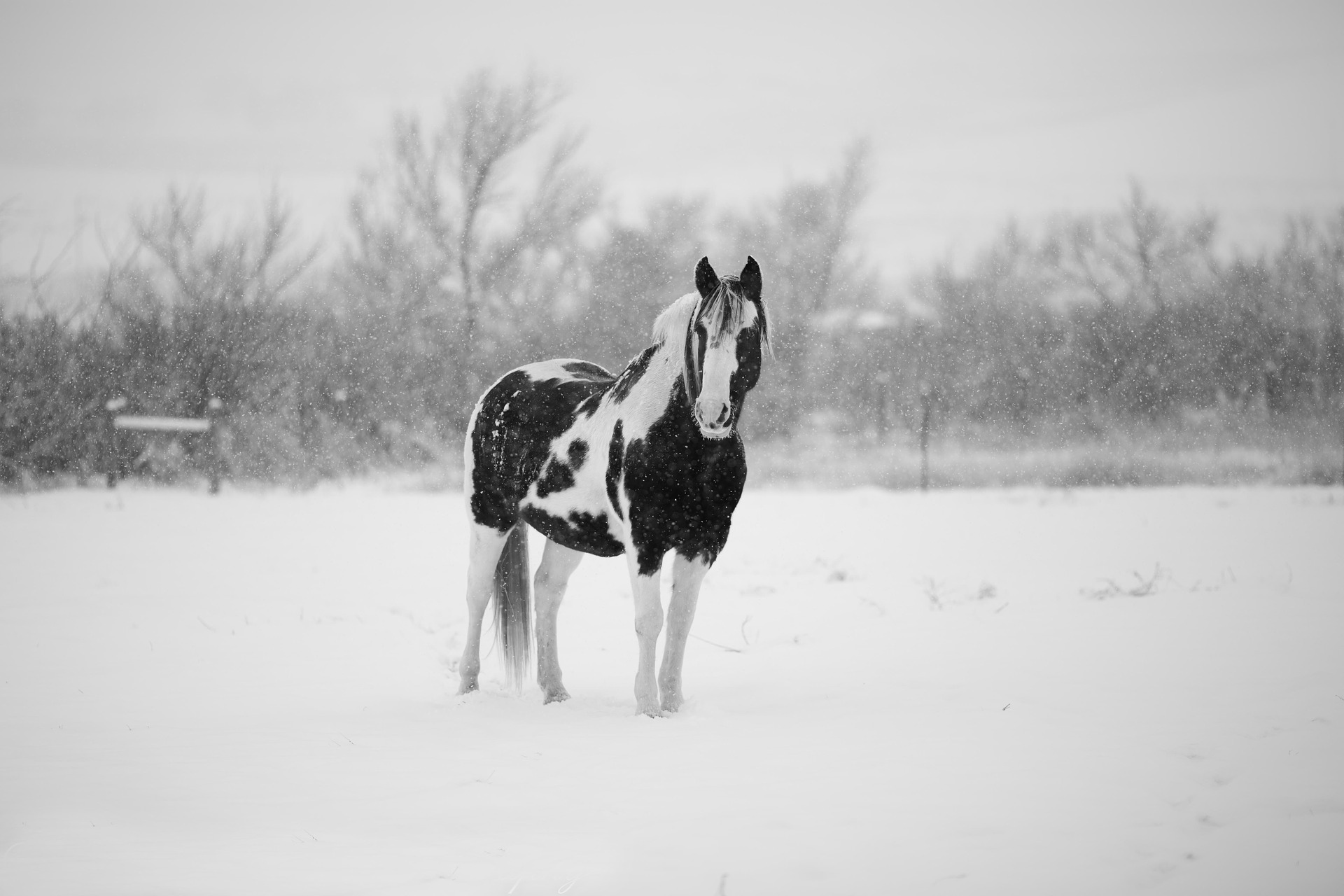

Feeding horses for weight gain is a common situation that we are asked about, especially when cold weather sets in. Some horses do not maintain their bodyweight easily and it can prove a real challenge to keep them at an ideal weight. Ultimately your horse’s ribs should not be visible, but they should be easily felt if you run your hand along your horse’s side. Regularly monitoring your horse’s weight with a weight tape or livestock scale will allow you to identify any changes to their weight early, thereby enabling you to make corrective actions quickly. A good first step to correcting a weight issue is understanding why the horse is underweight.
Weight loss can be credited to several factors, only some of which are feed related. A good first step is to check your horse’s teeth. Horses evolved eating coarse forage and plant materials that require thorough grinding by the molars to break down the particle size of the food. Teeth that are in poor condition can quickly lead to weight loss. Poor worming regimes can also cause weight loss regardless of what and how much you are feeding. Parasites may compete directly for the nutrients inside the digestive tract. They may also cause damage to the intestinal lining, making it difficult to absorb nutrients. Stress is another contributor to weight loss. If your horse is a chronic stall walker, weaver or fence runner, he is burning calories needlessly, all day long. Simple management changes, such as daily turnout or the addition of a stall buddy, can alleviate these behaviors.
After addressing all possible causes for the horses’ weight loss, increasing the amount and quality of fiber the horse is receiving should be the first dietary change made, followed by increasing the energy density of the concentrate portion of the ration. Increasing the fat level of the diet is the easiest and safest way to increase the energy density of the diet. Fat sources such as vegetable oil contain 2.5 to 3 times more energy than grains on an equal weight basis. Higher energy levels can be obtained by feeding a lesser amount of a high-fat concentrate mix compared to a concentrate mix containing lower-energy grains. Research has indicated that adding 5 to 10% fat to the total diet has maintained the body weight of horses with a 21 to 25% decrease in concentrate intake. Adding fat to a horse’s diet permits safe weight gain while reducing the chance of colic or founder. Digestion of fat also yields less internal body heat when compared to other diets. Thin horses will gain weight and do so without having to eat as much grain if the diet is fortified with additional fat. LMF Feeds offers several high fat feeds such as LMF Gold and LMF Showtime.
It is essential that owners follow the feeding directions listed on the back of the feed bags to ensure their horse will maintain or gain weight as they desire.
Whether your horse is underweight, overweight or just right, it’s important to evaluate his condition through advancing age, environmental changes and performance demands regularly. Addressing unwanted fluctuations before they become potential health risks is the key to maintaining optimal body weight.